For decades, robots have largely existed within carefully controlled environments. They assembled products, transported materials, performed repetitive tasks, and followed precisely defined instructions.
That model is beginning to change.
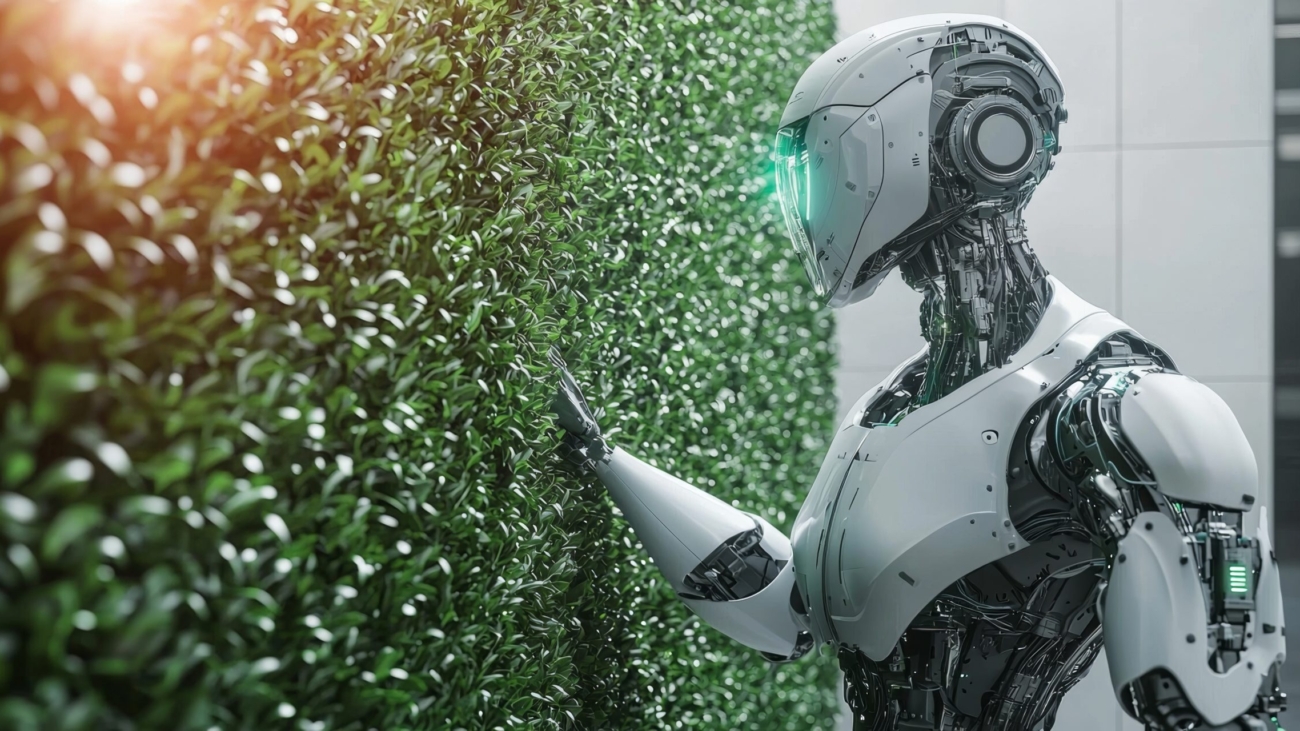
The combination of large language models, advanced AI reasoning, and increasingly capable physical hardware is creating a new class of machines: generalist robots that can interpret instructions, understand their surroundings, adapt to changing situations, and perform a much broader range of activities.
In other words, AI is beginning to move beyond the screen.
It is gaining a physical presence.
For the insurance industry, this development represents more than another technological milestone. As robots become capable of interacting with people, property, workplaces, healthcare environments, and infrastructure, they will also interact with risk in entirely new ways.
The opportunity is significant. So are the questions.
From Programmed Machines to Generalist Robots
Traditional robots have typically been designed for a specific purpose. A robotic arm might repeatedly perform the same manufacturing task, while an automated vehicle might follow a predetermined route.
These systems can be highly effective, but their flexibility is limited.
Generalist robots represent a different approach.
Powered by increasingly sophisticated AI models, they can potentially interpret natural-language instructions, recognize objects, understand spatial relationships, respond to environmental changes, and determine how to complete unfamiliar tasks.
Imagine telling a robot to retrieve a particular item from another room. Instead of requiring a sequence of pre-programmed commands, the robot could interpret the request, locate the object, navigate its surroundings, avoid obstacles, and return with the item.
This ability to combine perception, reasoning, and physical action opens the door to a much wider range of applications.
Consider an autonomous mobility assistant operating in a busy public environment. It could potentially navigate around people, identify obstacles, respond to verbal instructions, and help someone reach a particular destination.
The machine is no longer simply executing a predefined task.
It is interpreting the world around it.
That shift has profound implications for insurance.
When Physical AI Becomes Part of the Risk Landscape
Every new capability creates a corresponding set of questions for risk professionals.
What happens when an autonomous machine makes an incorrect decision?
Who is responsible when someone is injured?
Does liability rest with the owner, manufacturer, software developer, operator, technology provider, or another party?
And how should responsibility be determined when several systems contribute to a single decision?
These questions are familiar from other areas of automation and autonomous technology, but physical AI introduces additional layers of complexity.
A robot operating in the real world can affect people and property directly. It may encounter situations its developers did not anticipate, interact with systems it was never specifically designed to work with, or respond to circumstances that fall outside its original training data.
As robots become more capable, insurers will need to understand not only what these systems are designed to do, but also how they behave when conditions change.
1. Robots Could Transform Risk Assessment and Claims
One of the clearest opportunities lies in property inspection, risk assessment, and claims management.
Generalist robots could potentially enter environments that are dangerous, inaccessible, or impractical for people.
After a natural disaster, for example, autonomous machines could enter damaged buildings, inspect infrastructure, capture images and video, and collect information without immediately exposing human assessors to hazardous conditions.
On construction sites, robots could monitor working environments and identify potential safety issues. In industrial settings, they could inspect equipment or hard-to-reach areas.
Even wearable robotic systems such as exoskeletons could support professionals performing physically demanding inspections or claims assessments.
The result could be faster assessments, richer evidence, and reduced exposure to dangerous environments.
But there is another dimension to consider.
When Machines Start Finding Patterns
Advanced AI systems can identify patterns that humans may overlook. That capability can be extremely valuable when assessing the cause or severity of a loss.
A robot could potentially combine visual information, environmental conditions, historical data, and contextual signals to form a view of what happened.
But insurers should not assume that an AI-generated conclusion is automatically correct.
Machine-learning systems can identify relationships that are difficult for humans to explain. They can also develop unexpected behaviors when exposed to new data or when multiple AI systems interact.
Research into phenomena such as unexpected or indirect learning in AI systems illustrates just how difficult it can be to understand every behavior emerging from complex models.
For insurers, this creates an important principle:
More data does not automatically mean better decisions.
The data generated by physical AI could eventually influence claims, underwriting, risk models, pricing, and product design. Strong governance, validation, human oversight, and clear accountability will therefore become increasingly important.
2. A New Workforce, and a New Workers’ Compensation Question
The impact of robotics will not stop with insurance companies themselves.
The businesses insurers cover are also likely to become increasingly automated.
Factories, warehouses, construction sites, logistics operations, healthcare facilities, and other workplaces may gradually integrate more autonomous machines into everyday operations.
This could reduce certain types of workplace risk while creating entirely new ones.
Robots might monitor working environments, detect unsafe conditions, or perform dangerous tasks that would otherwise expose employees to injury.
But what happens when an autonomous machine makes a mistake?
Traditional workers’ compensation and liability frameworks are built around human activity and relatively understandable chains of responsibility. Physical AI can introduce much more complicated relationships between employee, employer, machine, manufacturer, software provider, and operator.
As robots become more autonomous, insurers may need to reconsider how workplace risks are classified, monitored, and transferred.
The question may no longer simply be:
“Who was operating the machine?”
It may become:
“Who designed, trained, deployed, maintained, supervised, and ultimately controlled the machine’s behavior?”
That distinction could have significant implications for future insurance products and coverage structures.
3. An Aging Population Could Accelerate Robotic Care
Another major opportunity—and challenge—lies in healthcare and long-term care.
Longer life expectancy and changing demographic patterns are placing pressure on care systems in many parts of the world. At the same time, many healthcare organizations face shortages of skilled workers.
Robotic assistants could potentially help address some of these challenges.
Machines may eventually support patients with mobility, transportation, medication reminders, household tasks, monitoring, or other activities of daily living.
For families and care providers, this could offer valuable additional support.
But care environments involve some of the most vulnerable people in society, making risk management especially important.
What happens if a robotic assistant incorrectly interprets an instruction? What if a patient falls while being supported by a machine? What happens when a system encounters a situation it was never trained to handle?
These are not simply technical questions.
They are questions of responsibility, safety, accountability, and trust.
Insurance will have an important role to play in understanding these emerging risks as robotic systems become more integrated into care environments.
Cybersecurity Becomes Physical Risk Management
The more connected robots become, the more important cybersecurity becomes.
A compromised digital system can already cause significant financial and operational damage. A compromised physical system could potentially create consequences in the real world.
Imagine a connected machine responsible for moving people, inspecting infrastructure, assisting patients, or operating within an industrial environment.
A cybersecurity vulnerability could potentially become a physical safety issue.
This creates a convergence between cyber risk and physical risk.
Insurers will therefore need to consider questions such as:
- How securely are robots connected to external systems?
- Who can access their software and data?
- How are updates and patches managed?
- What happens if connectivity is interrupted?
- How quickly can a compromised system be isolated?
- Who is responsible for monitoring autonomous behavior?
- How is evidence preserved after an incident?
Cybersecurity can no longer be treated solely as an IT concern when software has the ability to control physical machines.
Responsible AI Moves Into the Physical World
AI governance becomes even more important when algorithms can directly affect people and environments.
Transparency, fairness, explainability, accountability, privacy, and human oversight are already central considerations for responsible AI.
Physical robots add another layer: real-world consequences.
An incorrect recommendation in a digital environment may require correction. An incorrect physical action could potentially result in injury or property damage.
That means insurers and the businesses deploying these technologies will need to think carefully about how AI systems are tested before deployment and monitored afterward.
Responsible AI should not be treated as a compliance exercise performed at the end of a technology project.
It needs to become part of the entire lifecycle—from design and training through deployment, monitoring, incident response, and continuous improvement.
Insurance Will Need to Insure the Transition, Not Just the Technology
The emergence of generalist robots creates an unusual situation for insurers.
They will not simply be insuring robots.
They will be insuring the new ecosystems created around them.
Manufacturers, software developers, operators, businesses, healthcare providers, infrastructure owners, technology platforms, and consumers may all become connected through increasingly autonomous systems.
This could create new forms of liability, new cyber exposures, new workers’ compensation considerations, new property risks, and potentially entirely new insurance products.
At the same time, the data generated by robots could improve the industry’s ability to understand existing risks.
The challenge will be finding the balance between using that information to improve decision-making and recognizing the uncertainty that comes with systems whose behavior may not always be completely predictable.
Preparing for a World of Physical Copilots
The emergence of generalist robots marks a significant shift in the relationship between humans and technology.
AI is no longer confined to applications that read, write, analyze, or recommend.
Increasingly, it can see, move, interact, and act.
For insurance, that means the future of robotics cannot be viewed solely as a technology story. It is simultaneously a story about liability, cybersecurity, workplace safety, healthcare, claims, underwriting, risk modeling, and customer protection.
The most important question may not be whether robots will become more capable.
It is how society, businesses, regulators, and insurers will adapt when machines become active participants in the physical world.
The opportunities are substantial: safer inspections, faster claims, better risk intelligence, additional support for workers and caregivers, and entirely new ways of managing complex environments.
But every new capability also introduces new uncertainty.
The insurers best prepared for this next chapter will need to do more than understand what robots can do today. They will need to continuously evaluate what these systems are learning, how they behave in unfamiliar situations, and where responsibility sits when something goes wrong.
When AI gets a body, risk gets a new dimension.
And insurance will be one of the industries responsible for understanding it.